
Buyer guide · · 7 min read
Black pepper grades explained: TGSEB, TGEB, MG1 and GL grades
Indian black pepper is graded two different ways at once, by screen size and by bulk density. Knowing which system your supplier is quoting in is the difference between comparing offers and guessing.
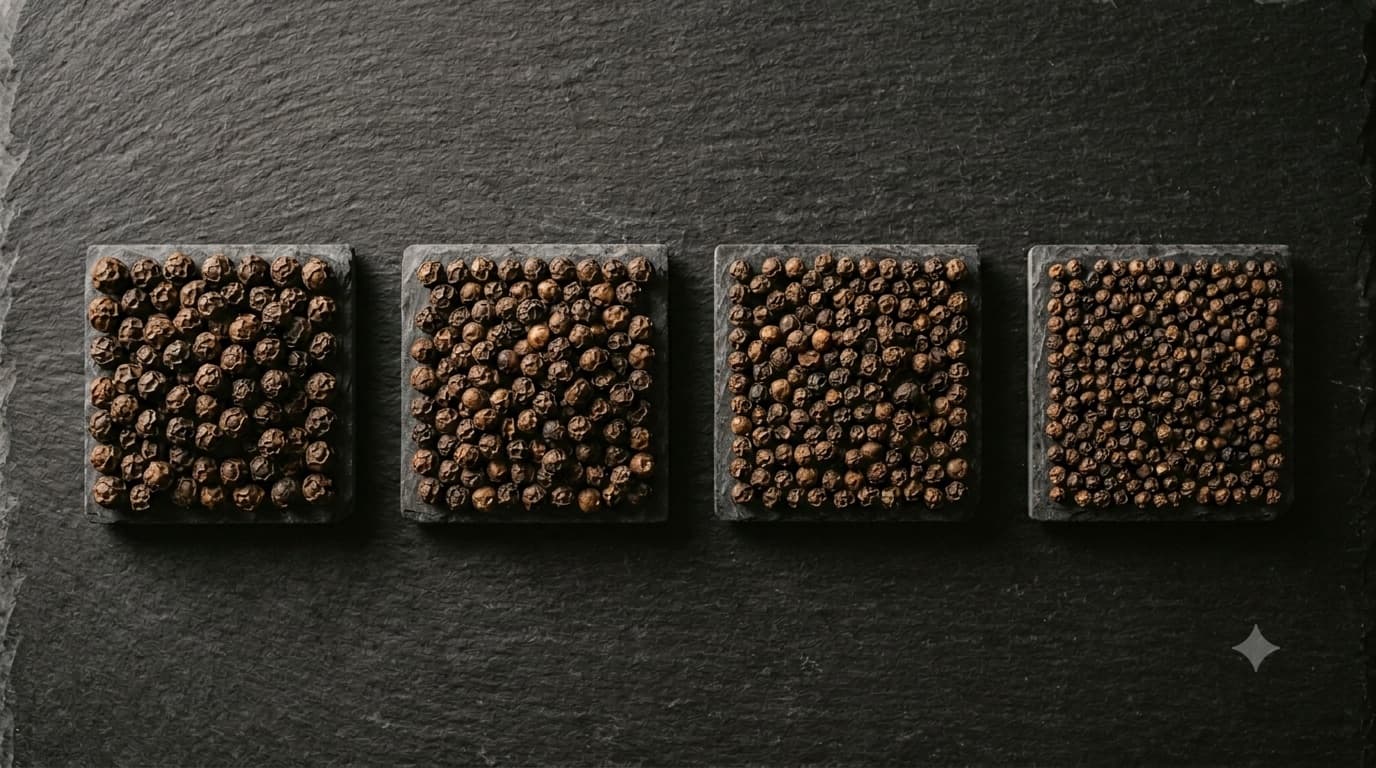
Indian black pepper is graded two different ways at the same time, and offers move between the two systems without always saying so. A buyer comparing "TGEB" against "550 GL" is comparing a screen size against a bulk density. They are not the same measurement, and one does not convert cleanly into the other.
This guide sets out what each grade name means, so you can read an offer sheet and know what you are being quoted.
The two grading systems
Screen size measures the diameter of the berry. Pepper is passed over screens, and the grade name records the aperture it stays on. This is how the Tellicherry grades are described.
Bulk density measures how much a given volume of pepper weighs, in grams per litre. Denser pepper generally means fuller, heavier berries and fewer light or hollow ones. This is how the Malabar Garbled and GL grades are described.
Both are proxies for the same underlying thing: sound, well-filled berries. They just approach it from different directions, and each suits a different kind of buyer.
The Tellicherry grades
Tellicherry grades are the large-berry, appearance-led end of the range.
TGSEB, Tellicherry Special Extra Bold. Screened at 4.75 mm and above, with high bulk density. This is the top size grade of Indian black pepper. Buyers specify berry size, density, moisture at or below 11 percent, piperine and foreign matter. It goes to spice houses, grinders and retail brands that sell pepper on the look of the berry, in mills and in clear packaging.
TGEB, Tellicherry Extra Bold. Screened at 4.25 mm and above. One size step below TGSEB, and the more widely traded of the two. The same parameters apply: berry size, bulk density, moisture and piperine.
If your product shows the peppercorn to the customer, you are usually in this part of the range.
The Malabar Garbled grades
"Garbled" means cleaned: stalks, light berries and foreign matter removed.
MG1, Malabar Garbled Grade 1. The standard cleaned grade from the Malabar coast, sold on bulk density rather than screen size alone. Specified on berry size, bulk density, moisture, light berries and piperine. This is the working grade for grinders, blenders and food manufacturers, and it carries a great deal of the volume.
MG2, Malabar Garbled Grade 2. A step below MG1, specified on density, moisture, foreign matter and piperine.
If the pepper is going to be ground, MG1 is usually the sensible starting point. Paying a size premium for berries you are about to mill is a common and avoidable mistake.
The GL grades
GL is simply grams per litre. The number is the target bulk density.
- 500 GL. Commercial grade, around 500 g/L, specified on density, moisture and berry size.
- 550 GL. Premium commercial, around 550 g/L, with piperine specified.
- 600 GL. Premium, around 600 g/L, with piperine and purity specified.
Higher density generally correlates with fuller berries, lower light-berry content and a better yield when ground. Because GL is a direct measurement rather than a named trade grade, it is often the clearest way to write a contract: a number either is met or it is not.
Piperine, and why it is on the sheet
Piperine is the compound responsible for pepper's pungency. It is reported as a percentage and it is a standard parameter across the Indian grades.
Buyers who blend to a target heat, or who supply manufacturers working to a fixed recipe, should specify piperine rather than infer it from the grade name. Size and density describe the berry. Piperine describes what it does in the food.
How to write the specification
Whichever grade name is on the offer, the specification should state the measurements, not just the label:
- Screen size in millimetres, or bulk density in g/L, or both
- Moisture, as a maximum percentage
- Piperine, as a minimum percentage
- Light berries and foreign matter, as maximum percentages
- Any microbiological limits your destination requires
Then confirm that a Certificate of Analysis for the shipped lot will report against those numbers. A grade name on an invoice is a description. A COA against stated parameters is a check.
A short way to choose
- Selling whole peppercorns on appearance: look at TGSEB or TGEB.
- Grinding or blending: look at MG1, or specify a GL number directly.
- Working to a fixed heat level: specify piperine whatever else you choose.
- Comparing two offers: convert both to the same measurement before you compare the price, or you are not comparing anything.
If you would like the Indian grades quoted against your volume and destination, send the specification and we will respond within 24 hours.
This guide is general information for buyers, not a substitute for the requirements of your destination market. Confirm current rules with your own customs broker or authority.